
Manual markdown processes create challenges for grocery operators, from inconsistent pricing to missed opportunities to reduce shrink. Automated markdown management helps grocers simplify manual processes, improve pricing decisions, and use data to create more efficient workflows across their operations.
Price markdowns are a necessary part of grocery retail, but without the right markdown optimization solutions, they can reduce margins instead of protecting them. An automated markdown process ensures products are discounted at the right time to reduce shrink, move seasonal inventory, and make room for new products. While grocers face common challenges with pricing decisions and execution, improving your markdown strategy helps standardize processes, make more informed pricing decisions, and protect margins.
Markdown decisions depend on more than expiration dates and inventory levels. Data availability, labor, technology, customer experience, and your ability to measure results all influence how markdowns are planned and executed.
To make informed markdown decisions, you need timely, accurate data rather than relying on spreadsheets or legacy software. Important data points include:
Without real-time visibility into this information, it’s difficult to determine when products should be marked down. Reducing prices too early can sacrifice revenue, while waiting too long increases the risk of shrink.
Effective markdown management depends on having enough staff time to review inventory and apply price changes before products lose value. Common labor challenges include:
When markdowns are delayed, products may not be discounted in time, increasing the risk of shrink.
Clear, accurate markdown labels help customers understand pricing and reduce confusion at the shelf and checkout. Important considerations include:
Clear, consistent markdowns help reduce pricing disputes and improve the shopping experience.
Integrating markdown optimization solutions with legacy store systems can be challenging. Common hurdles include:
Without connected systems and accessible data, markdown decisions require additional manual effort.
Evaluating the effectiveness of your markdown strategy requires more than comparing sales before and after a price reduction. Multiple factors can influence results, including:
Without measuring performance, it’s difficult to determine whether your markdown strategy is reducing shrink, protecting margins, or needs adjustments.
Markdown rotation timing directly affects both shrink and profit margins. While perishables have different shelf lives, timing isn’t only about reducing shrink. If products are marked down too frequently or at predictable times, customers may delay purchases in anticipation of discounts, reducing margins.
A markdown strategy also depends on standardized processes. Because markdown requirements vary across departments, the process should clearly define roles and responsibilities. Assigning ownership helps reduce confusion over who manages markdown decisions. Without that structure, employees rely on individual judgment when applying markdowns, leading to inconsistent pricing and unnecessary margin loss.
Manual markdown processes take time, increase the risk of pricing errors, and make it harder to manage perishable inventory consistently. An automated markdown management solution helps standardize execution, improve pricing accuracy, and reduce the manual effort required to manage markdowns.
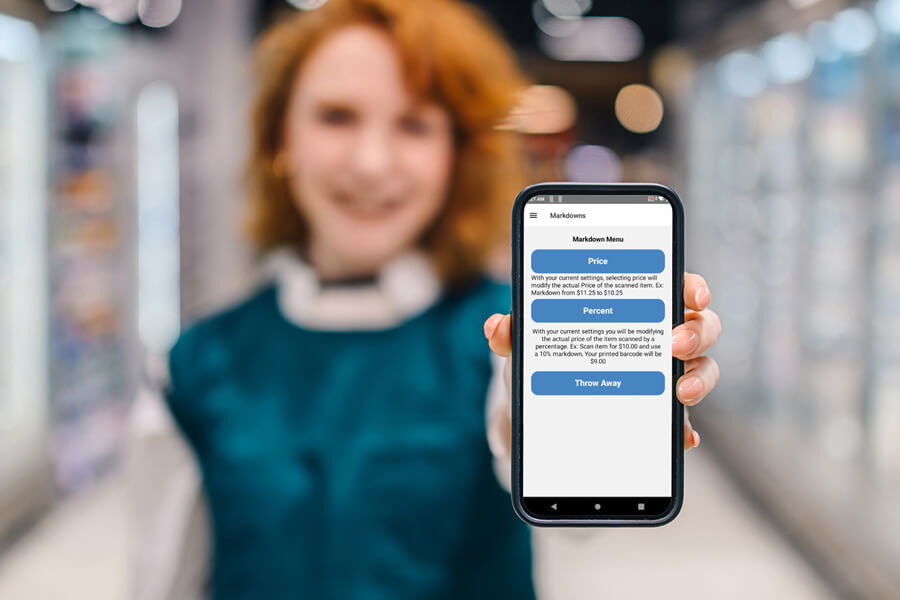
Using handheld devices, employees can identify products approaching expiration, apply markdowns, and print updated barcode labels that clearly communicate savings to shoppers. QR codes allow the same label to be updated as additional markdowns are applied, reducing the need for multiple labels. The system also tracks markdown activity and provides reporting that helps managers monitor performance. Together, these capabilities help address many of the challenges associated with manual markdown processes.
Automated markdown management reduces the time required to identify products, update prices, and apply markdown labels. Employees can quickly complete routine tasks using handheld devices, including:
Integrating markdown optimization solutions with other pricing technologies helps improve pricing decisions while giving managers greater visibility into markdown activity. Additional benefits include:
Automatic markdown triggers reduce reliance on employee judgment by applying predefined rules based on:
Reporting provides visibility into markdown performance, helping you measure the effectiveness of your markdown strategy, including:
Automated markdown management helps support business growth by making it easier to manage markdowns across larger inventories and multiple locations, including:
Creating a successful markdown strategy requires the right processes, technology, and data to make informed pricing decisions. Without the right tools, managing markdowns across a grocery operation can become time-consuming and difficult to scale.
React Handheld (RHC) provides a mobile markdown management solution that helps grocery teams identify products requiring markdowns, update prices, print updated labels, and track performance. Running on durable Zebra hardware with built-in barcode scanners, RHC helps simplify daily markdown tasks while providing the data needed to improve markdown processes.
If you’re looking for a better way to manage markdowns, our team can help you implement a solution that fits your grocery operation.