

Inventory inaccuracies, stockouts, spoilage, and inefficient transfers can increase costs and reduce profitability. Improving inventory visibility and reducing manual processes helps grocery operators make faster decisions, control shrink, and maintain more accurate inventory data.
Keeping your grocery business profitable is a complex balancing act. Accurate inventory management in grocery stores is essential for maintaining the items in stock that your customers want, but overstocking can lead to spoilage and shrink. Your prices must be competitive, but your margins are typically razor-thin, and operational efficiency is non-negotiable. If you have multiple locations, you need to ensure optimal inventory at each store to maximize revenues and customer satisfaction.
The impact of inventory and operational challenges can add up quickly. According to a 2025 Grocery Dive report citing Coresight Research, retailers lose an average of 5.5% of gross sales due to in-store inefficiencies, including inventory management issues, pricing errors, promotion mistakes, stock management problems, and out-of-stocks.
Although challenges can vary from business to business, overcoming these common sources of shrink will help you maintain a healthier bottom line.
Produce, dairy, baked goods, and other short-shelf-life products leave little room for error. Overstocking, inaccurate counts, poor demand forecasting, and failure to follow first-in, first-out (FIFO) practices can all contribute to waste and shrink. Effective inventory management in grocery stores requires visibility into inventory movement, sales trends, and product performance.
Mobile tools and grocery store inventory management technology can help teams identify issues sooner and make faster decisions.
Many of the expenses that affect profitability can be traced back to inventory accuracy, ordering decisions, and product availability. Effective inventory management in grocery stores helps reduce waste, improve labor efficiency, maintain stock levels, and support stronger vendor relationships.
The following are some of the most common inventory-related costs grocery operators need to manage.
Manual inventory management in grocery stores requires employees to spend time on tasks that can often be automated. Barcode technology, handheld computers, and mobile printers help reduce labor requirements while improving accuracy.
Overordering can tie up capital, consume valuable storage space, and increase the risk of spoilage. Grocery inventory management tools can help operators make more informed purchasing decisions and align replenishment with actual demand.
When products are unavailable, customers may delay a purchase, choose an alternative item, or shop elsewhere. Zebra’s Annual Global Shopper Study found that stockouts lead customers to question whether a store can consistently meet their needs and whether it is time to try a competitor. A grocery store inventory management system can improve inventory visibility and support more accurate replenishment decisions.
Consistently late deliveries and partial orders can increase grocery inventory management costs. Tracking vendor performance can help identify issues before they affect inventory levels or profitability. A grocery store inventory management system can also help compare vendor pricing, monitor margins, and support purchasing decisions across the business.
A product may be overstocked at one location and out of stock at another. Without visibility into inventory across the business, identifying those situations and responding quickly becomes much more difficult. Inventory management in grocery stores requires timely, accurate information, especially when multiple locations are involved.
Access to accurate, real-time inventory data helps grocery operators make more informed decisions across every location.
Inventory management in grocery stores becomes more difficult when employees are working with incomplete information. Pricing errors, stockouts, excess inventory, and perishable inventory losses are often symptoms of the same problem: inventory data that is outdated, inaccurate, or difficult to access.
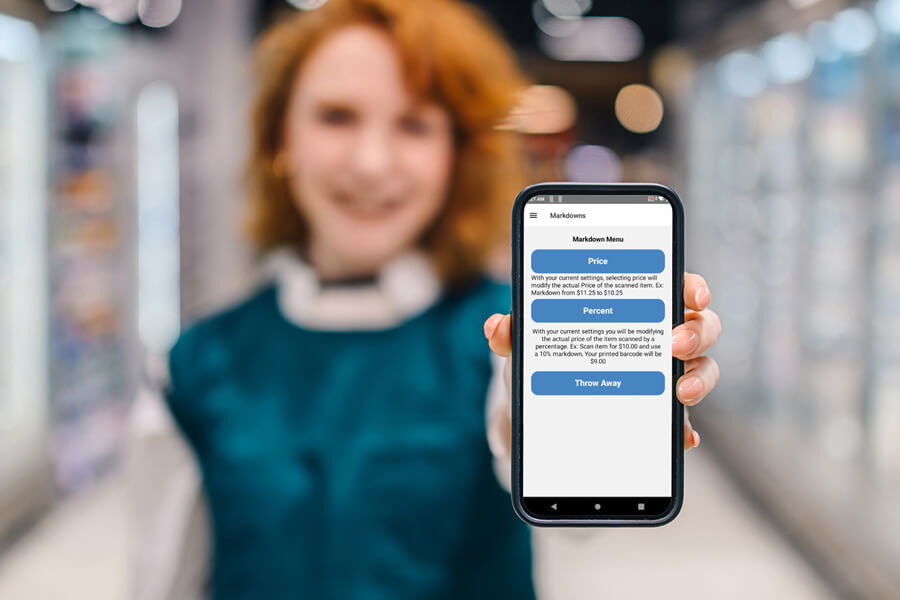
Mobile devices, barcode scanning, and inventory reporting provide employees with a faster way to capture and access inventory information throughout the store. This allows teams to complete routine inventory tasks with greater accuracy while reducing the time spent on manual processes.
For grocery operators evaluating inventory management solutions, working with a provider that understands grocery operations can help identify tools that fit their business requirements.