
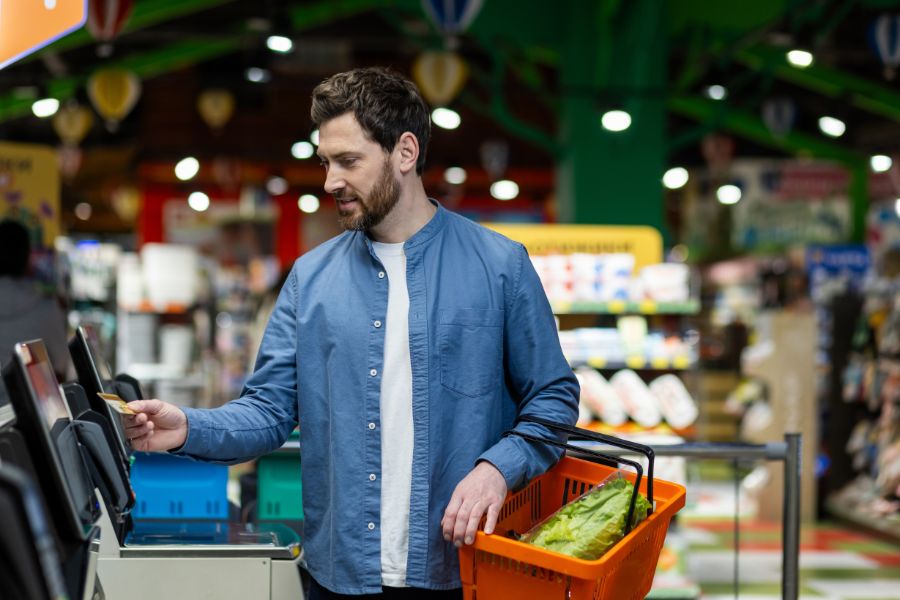
Many grocers hesitate to add grocery store self-checkout because they associate it with impersonal retail experiences. They worry it could dilute the service-driven identity that sets their stores apart and weaken long-standing customer relationships.
That concern reflects a real commitment to service. However, stores face two challenges if they avoid self-checkout technology: meeting evolving customer expectations and managing daily operations efficiently.
A growing share of shoppers expect self-checkout as part of a modern store experience. They choose it to save time, avoid lines, have better pricing visibility, and control their bagging process.
Without self-checkout, customers may reconsider where and how they shop, linking shopper values directly to your store’s offerings.
Grocery staffing constraints continue to affect store operations nationwide. Many stores struggle to maintain consistent coverage at checkout while also supporting in-aisle service, curbside pickup, and order fulfillment.
Grocery store self-checkout helps with checkout by:
Rather than replacing service, self-checkout creates space for staff to deliver it where customers need it most.
Many grocery stores juggle multiple responsibilities at the checkout area. Staff cover traditional lanes while also answering questions, handling curbside pickup, and processing online orders. Supermarket self-checkout adds another option at the lane for smaller purchases and quick trips, reducing crowding at staffed registers during busy periods. This helps keep staff available to assist customers elsewhere in the store, including on the floor and with pickup orders.
Modern self-checkout systems also help staff respond more thoughtfully when assistance is needed. Machine vision and AI add context to self-checkout alerts. Attendants can quickly see whether the issue was caused by user error, system misinterpretation, or potential misuse. That insight allows staff to approach shoppers with clarity instead of assumptions, reducing friction and avoiding uncomfortable interactions. Informed, respectful interventions help staff respond more effectively, reducing friction at the lane and supporting a better shopper experience.
Grocery Dive reports that global installations of self-checkout terminals are projected to reach 2 million by 2029, signaling that many retailers now view self-checkout as standard.
With self-checkout in place, stores can:
Self-checkout operates alongside staffed lanes to give stores more flexibility at checkout. Stores can maintain high standards of service while giving customers more choice.
Self-checkout technology was not something many grocers previously considered. Today, grocers now use it alongside staffed lanes to give customers another way to pay while keeping service available throughout the store. Adding self-checkout gives stores more lane flexibility. Associates can focus on in-aisle support, curbside pickup, and assisting shoppers throughout the store. To learn more about grocery store self-checkout and explore affordable, store-ready solutions, connect with the DCR team. We work directly with grocers to evaluate checkout workflows and recommend solutions that align with how their stores operate today.