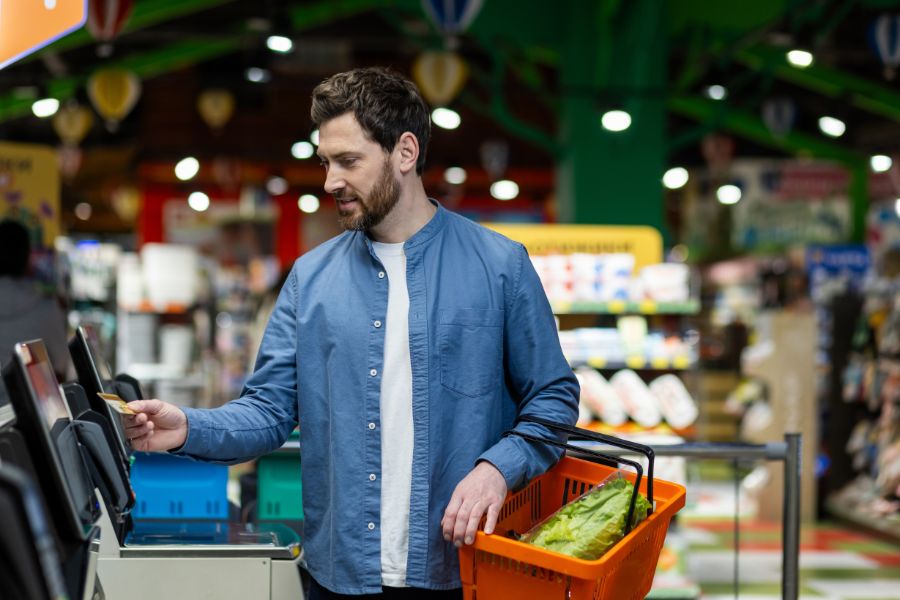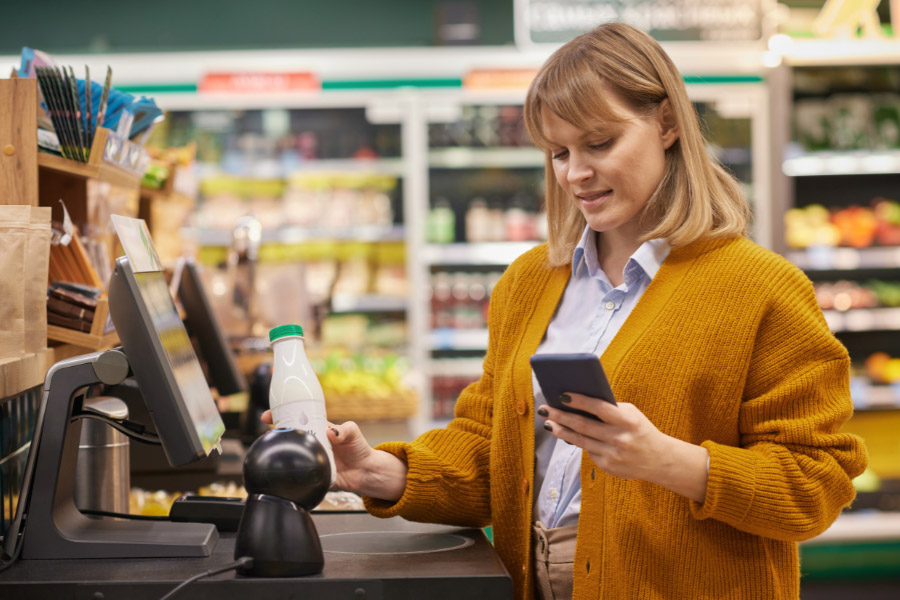

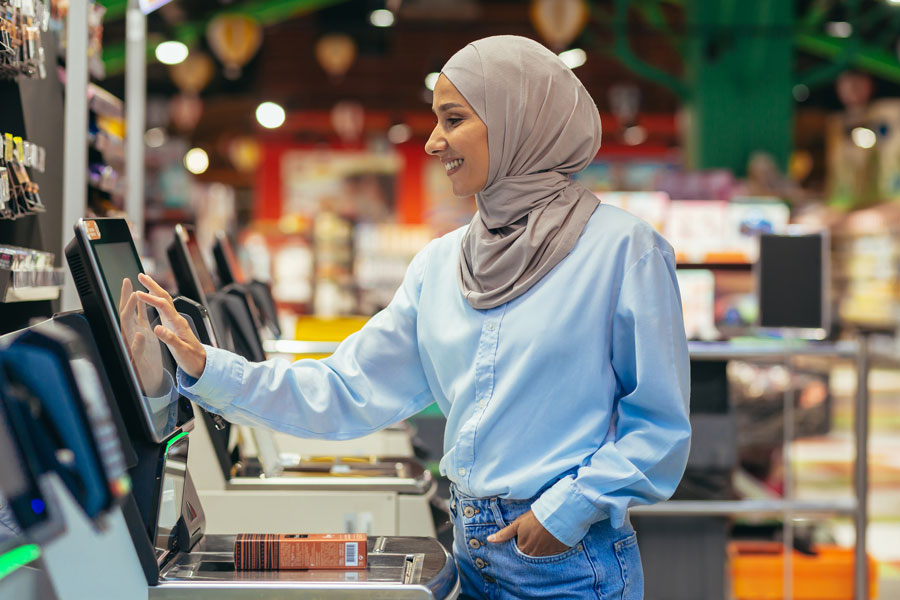
Before expanding grocery store self-checkout, grocers need to understand how shoppers use checkout today. Self-checkout can improve convenience when it aligns with customer behavior, but it can create friction if treated as a one-size-fits-all solution. The focus should be on flexibility, choice for customers, and an easy process.
Customer preferences usually come down to what they’re buying and how they like to check out. A quick trip may lead to self-checkout, while a full cart may lead to a cashier. Understanding how many people prefer self-checkout matters more than simply knowing demand exists. In a recent survey from Capital One Shopping, 43% of consumers reported preferring self-checkout over staffed registers, reinforcing the idea that adoption depends on the use case rather than a single shopper profile.
Self-checkout placement plays a big role in how the front end functions day to day. If shoppers can’t easily see the lanes, they won’t use them. If staff can’t see the area clearly, response time slows down when help is needed. During busy periods, poor positioning can create backups that spill into other lanes or main walkways.
It’s not just about where customers can see the lanes. Line buildup and aisle access matter just as much. Changes in grocery store self-checkout placement alter the route shoppers take and what they see before leaving, which can affect last-minute purchases. For multi-location operators, consistent layouts across stores help customers move through checkout without hesitation.
Grocery store self-checkout depends on how well systems work together. Compatibility with your grocery POS ensures real-time inventory updates, promotions apply correctly, and pricing stays consistent across lanes. Disconnected systems often lead to missed discounts, inaccurate counts, and avoidable interruptions.
Technology also has to handle the everyday realities of checkout without causing delays. Loyalty accounts, digital coupons, age-restricted items, and routine overrides are part of regular transactions. When the system slows down during those moments, the impact is immediate, especially during busy periods. When everything works together the way it should, checkout runs the way customers expect.
Expanding grocery store self-checkout changes how labor is used. Cashiers spend less time scanning and more time monitoring activity and assisting customers. Training needs to reflect that shift, preparing staff for real checkout scenarios so transactions can proceed without delay.
As stores adopt self-checkout, teams also need to pay attention to details that once mattered less. Label placement is one example. When customers scan their own items, packaging becomes more important. A bakery label on top of a cake box may work at a staffed lane, but at self-checkout, a shopper might tilt the box to find the barcode, increasing the risk of product damage.
Shrink is a valid concern when expanding grocery store self-checkout, but risk is influenced more by execution than by the technology itself. Modern systems rely on a combination of monitoring tools, alerts, and transaction data to flag unusual activity in real time. That visibility allows staff to intervene early without disrupting the shopping experience.
How shoppers feel about the process matters too. If the controls are applied in a steady, low-key way, most customers won’t think much about them. The real protection comes from paying attention to what the data shows over time. Looking at activity by item and by time of day makes it easier to spot patterns and adjust before minor issues grow into larger losses.
Cost is often the first question grocers ask when evaluating self-checkout. How much do self-checkout machines cost? The answer goes beyond hardware and software to include ongoing licensing, maintenance, and support. Labor costs may shift rather than disappear, as roles move from cashiering to monitoring and customer assistance.
Return on investment is not only about the upfront cost of equipment. It’s also influenced by what happens at the front end when the store gets busy. Grocery store self-checkout gives operators a way to process more transactions during peak periods without building out additional staffed lanes, which can increase sales during those windows. According to The Payments Association, 91% of retailers believe self-checkouts contribute to higher sales, reflecting alignment with customer preference rather than speed alone.
The expansion of grocery store self-checkout should be evaluated with a balanced view of both the opportunities and the exposure. Looking at both the benefits and the operational realities gives grocers a clearer basis for deciding what makes sense for their stores.
Self-service can provide meaningful operational advantages when aligned with store volume and shopper behavior. The value comes from increased capacity and more flexible labor use rather than speed alone.
Operational challenges typically arise when execution is inconsistent. Most risks are tied to management, training, and system reliability rather than the concept itself.
Expanding self-checkout works best when growth is phased rather than immediate. Rolling it out in stages gives operators time to see what’s working before expanding it to other stores.
Testing in a limited environment reduces risk and clarifies what adjustments are needed before wider deployment. Early data should guide expansion decisions.
Expansion requires balancing consistency with store-level realities. What works in one location may require refinement in another.
Adding more self-checkout lanes should align with the store’s direction, not just competitor activity. How customers are using checkout today, how well current processes are working, and how the team is staffed all influence whether expansion makes sense.
Market growth alone should not dictate timing, but it does signal momentum. According to Fortune Business Insights, the global self-checkout system market is projected to grow from USD 7.25 billion in 2026 to USD 21.61 billion by 2034. North America accounted for 41.8% of the market in 2025, indicating sustained regional adoption.
Long-term success depends on more than system features. Responsive, local support with 24/7 availability helps minimize disruption and ensures issues are addressed quickly.
Grocery store self-checkout works best when the team supporting it understands grocery operations. Industry experience helps anticipate compliance needs, peak traffic pressures, and the small workflow details that affect daily performance, while also guiding decisions as stores grow or adjust. Grocery store self-checkout systems should support integrations, configuration changes, and updates over time without requiring costly replacements.
Selecting the right partner ensures self-checkout remains a sustainable operational asset rather than a short-term upgrade. Learn more about how thoughtful implementation and ongoing support can strengthen long-term performance.