
Staffing instability affects daily execution in independent grocery stores, influencing scheduling, training, and department consistency. When processes are reinforced by integrated systems, grocers improve productivity and reduce inefficiencies that impact profitability and overall store performance.
Grocery store labor shortages make it harder for independent grocers to maintain consistent schedules, departments, and daily execution. Turnover is common. Some weeks you are fully staffed. Other weeks you are adjusting coverage and training new people.
When processes live in experienced employees instead of in the operation, results start to vary. Clear procedures, documented workflows, and system controls keep teams aligned even when staffing changes.
We work with independent grocers across the country, and staffing comes up in almost every conversation. Filling open positions has become more complex, especially for front-end and department roles. Hiring cycles are shorter than many operators would like, which means onboarding and cross-training are ongoing parts of management.
Hiring remains highly competitive, with grocery stores and food manufacturers employing 6.3 million people nationwide, according to the Food Industry Association (FMI). Schedule expectations have shifted, and candidates often weigh flexibility and day-to-day demands before committing. Independent grocers do not always have the same hiring resources as larger chains, so managers stay closely involved throughout the process. Even once roles are filled, departments and customer-facing positions require hands-on training and steady follow-up to maintain consistency. For many operators, process improvements and system support become practical solutions to labor shortage pressures that extend beyond recruiting.
Technology does not replace people. It reduces pressure on the roles that are hardest to fill and helps teams operate more consistently. When workflows are supported by the right systems, stores can maintain service levels without expanding headcount.
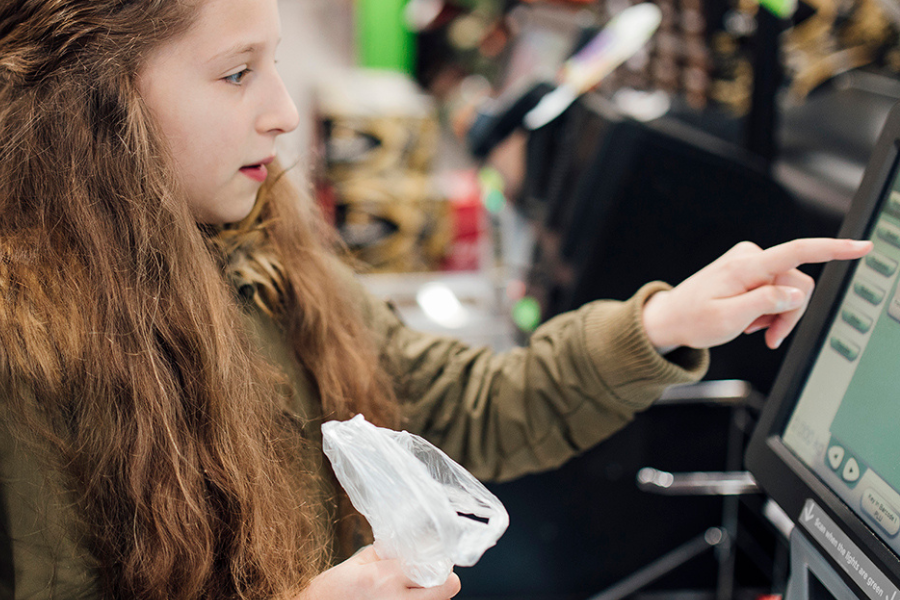
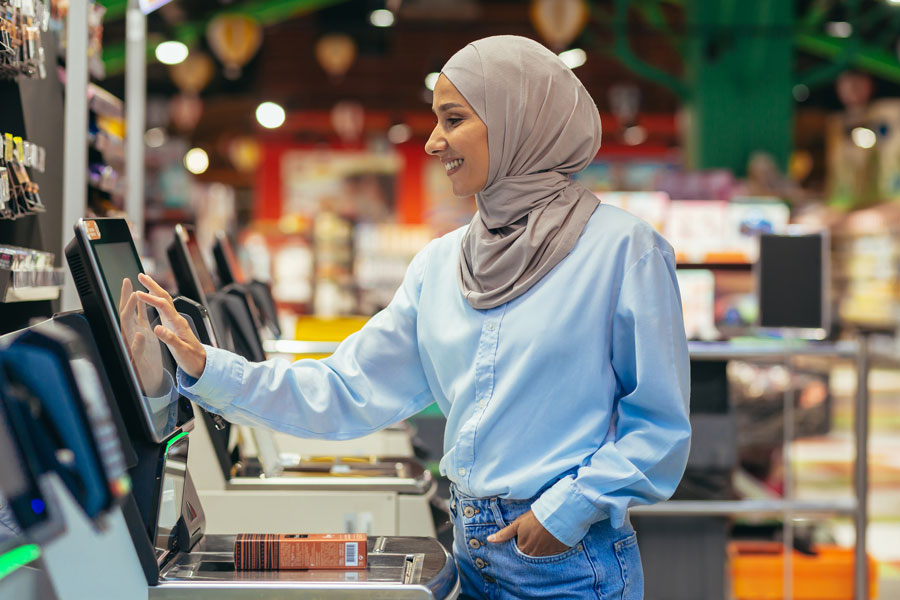
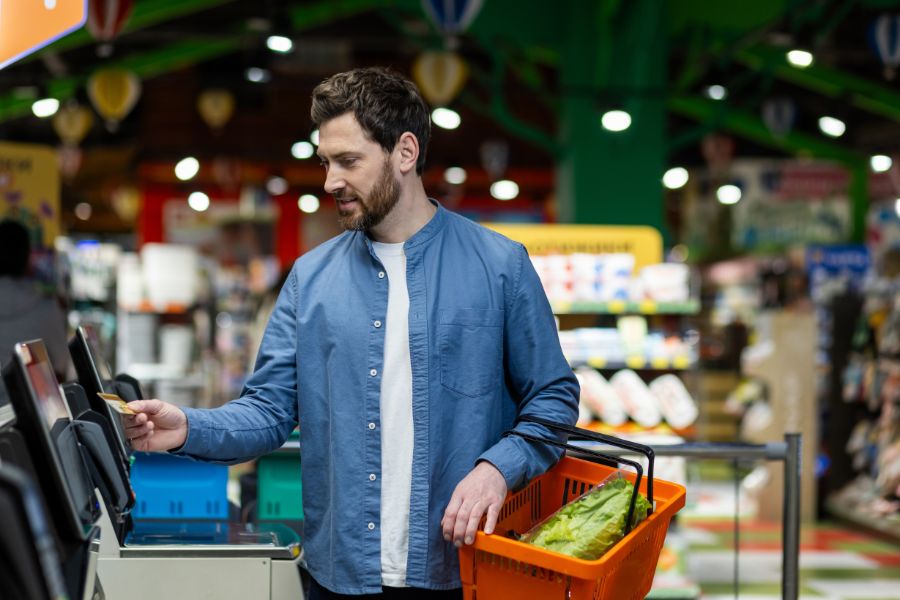
Self-checkout enables independent grocers to expand front-end capacity without assigning each lane to a dedicated cashier. Instead of staffing four traditional lanes, one trained attendant can oversee multiple self-service stations while remaining available to assist customers as needed.
Modern point of sale software and advanced scanner scales improve transaction speed and reduce manual intervention. Faster barcode recognition, intuitive prompts, and automated product identification help transactions move with fewer corrections and delays.
When hardware and software work together, front-end operations require less troubleshooting and oversight.
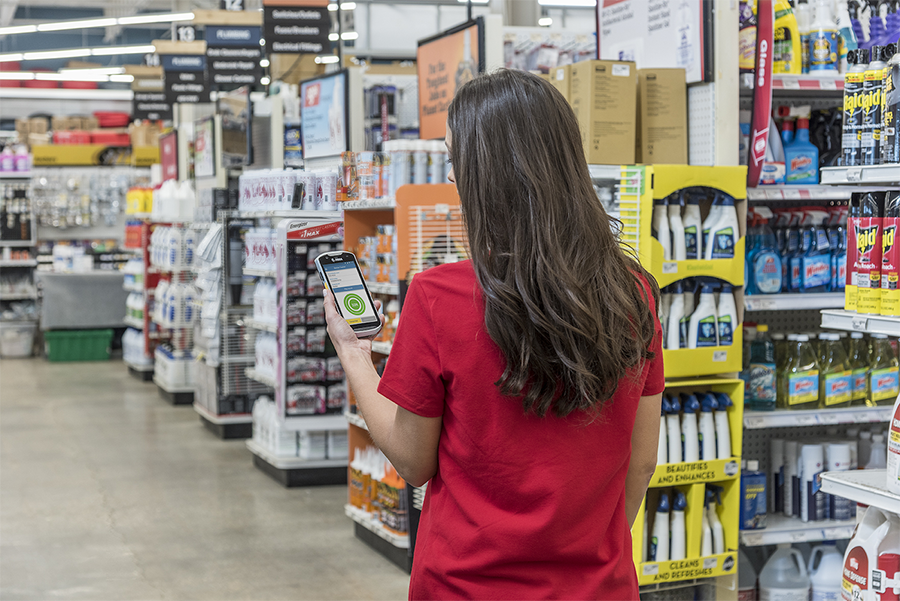
Mobile devices and store systems reinforce inventory accuracy, pricing consistency, and daily visibility.
Technology does not eliminate hiring challenges, but it can reduce the operational strain caused by turnover. The right systems increase productivity per employee, standardize execution, and reduce the number of manual steps required to complete daily tasks.
In grocery environments, mobile devices, integrated inventory tools, and guided workflows help employees move faster and make fewer errors. Voice-directed picking, wearable scanners, and task-based applications reduce back-and-forth steps and keep hands free for productive work. When software and devices work together, execution becomes more consistent from shift to shift.
Technology is not a substitute for staff. It’s a tool that supports consistency, improves throughput, and protects service levels when a grocery store labor shortage affects operations.
Staffing pressure is not new, and independent grocers have been adjusting to it for years. The opportunity is to use technology to streamline key processes and limit manual steps, allowing shifts to run more predictably, even as teams change.
If you are evaluating how to respond to a grocery store labor shortage, start with the workflows that break down first when staffing changes. We can review your current processes and outline practical options based on how your store operates.